


Custom PCB Assembly vs. PCB Fabrication: What Is the Difference?
If you are sourcing a printed circuit board for the first time, two terms come up almost immediately: PCB fabrication and PCB assembly. They sound similar, and vendors sometimes use them interchangeably, but they refer to two distinct stages of production. Understanding the difference helps you ask better questions, write cleaner specs, and choose the right manufacturing partner.
This article breaks down what each process involves, where one ends and the other begins, and why working with a partner that handles both under one roof is often the smarter move for custom builds.
What Is PCB Fabrication?
PCB fabrication is the process of manufacturing the bare board itself. No components, no solder, nothing functional yet. A fabricated PCB is the physical substrate that will eventually carry your circuit.
The fabrication process starts with your design files, typically Gerber files and a stackup specification, and ends with a bare board that matches your layer count, material selection, trace widths, and finish requirements. Key steps include:
- Laminating copper-clad layers according to the stackup
- Drilling vias and through-holes
- Etching copper traces onto each layer
- Applying solder mask and silkscreen
- Finishing the exposed copper pads (ENIG, HASL, immersion silver, OSP, and others)
The output is a bare, unpopulated board ready for the assembly stage.
What Is Custom PCB Assembly?
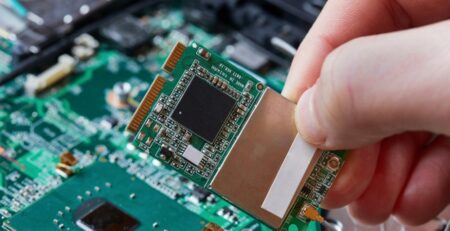
Custom PCB assembly is the process of populating that bare board with electronic components and soldering them into place to create a working unit. This is where your design actually comes to life. Learn more about the full process on our Custom PCB Manufacturing and Assembly page.
Assembly involves two primary technologies that are often used together:
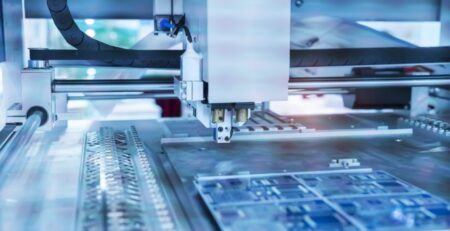
- Surface Mount Technology (SMT): components are placed directly onto pads on the board surface and reflowed in an oven
- Through-Hole Assembly: component leads are inserted through drilled holes and soldered on the opposite side
For custom builds, the assembly process is tailored to your specific bill of materials, component mix, volume, and quality requirements. High-complexity boards with BGAs, fine-pitch QFPs, or package-on-package components require specialized equipment and process controls that not every shop can deliver.
Where Fabrication Ends and Assembly Begins
A straightforward way to think about it: fabrication produces the board, assembly makes it work. Most product teams need both, and the sequence is always fabrication first.
Some teams split these across two vendors, sourcing bare boards from an offshore fabricator and sending them to an assembly house. This can save money on commodity boards but adds risk during design changes, introduces lead time gaps, and complicates accountability when something goes wrong at the board-to-assembly interface.
The Case for a Single Partner
When one contract manufacturer handles both fabrication and assembly, your engineering team deals with one point of contact, one set of design files, and one quality system. Any DFM issues caught during fabrication review can be addressed before boards are built. This matters most on custom PCBs where your stackup, material choices, and assembly requirements are closely connected.
SVTronics offers turnkey PCB assembly services that cover component sourcing, fabrication coordination, assembly, inspection, and test. For teams building custom boards at any volume, this end-to-end approach reduces handoffs and keeps your timeline intact.
Key Differences at a Glance
- Fabrication: produces the bare board substrate with copper layers, vias, and finish
- Assembly: populates the board with components using SMT, through-hole, or both
- Fabrication requires Gerber files and stackup specs; assembly requires a BOM, placement files, and assembly drawings
- Fabrication output is non-functional; assembly output is a working circuit board
- Both stages affect cost, quality, and lead time on custom builds
What This Means for Your Project
If you are requesting a quote, be clear about whether you need fabrication only, assembly only, or a full turnkey build. A good contract manufacturer will help you understand which files and specifications are required for each stage and flag any design issues before production starts.
For more on how the assembly process works from a technical standpoint, see our article on the SMT assembly process. If you are evaluating a full turnkey engagement, our guide on what turnkey PCB assembly includes is a good starting point.


Leave a Reply